



Beyond Hostile Two-State Policy toward Future-Oriented Peaceful Coexistence, Special Interview with Executive Vice-chairperson Kang Chang-il
- Peace & Unification Magazine No. 222
- 07-01-2026
Beyond Hostile Two-State Policy toward Future-Oriented Peaceful Coexistence,
Special Interview with Executive Vice-chairperson Kang Chang-il
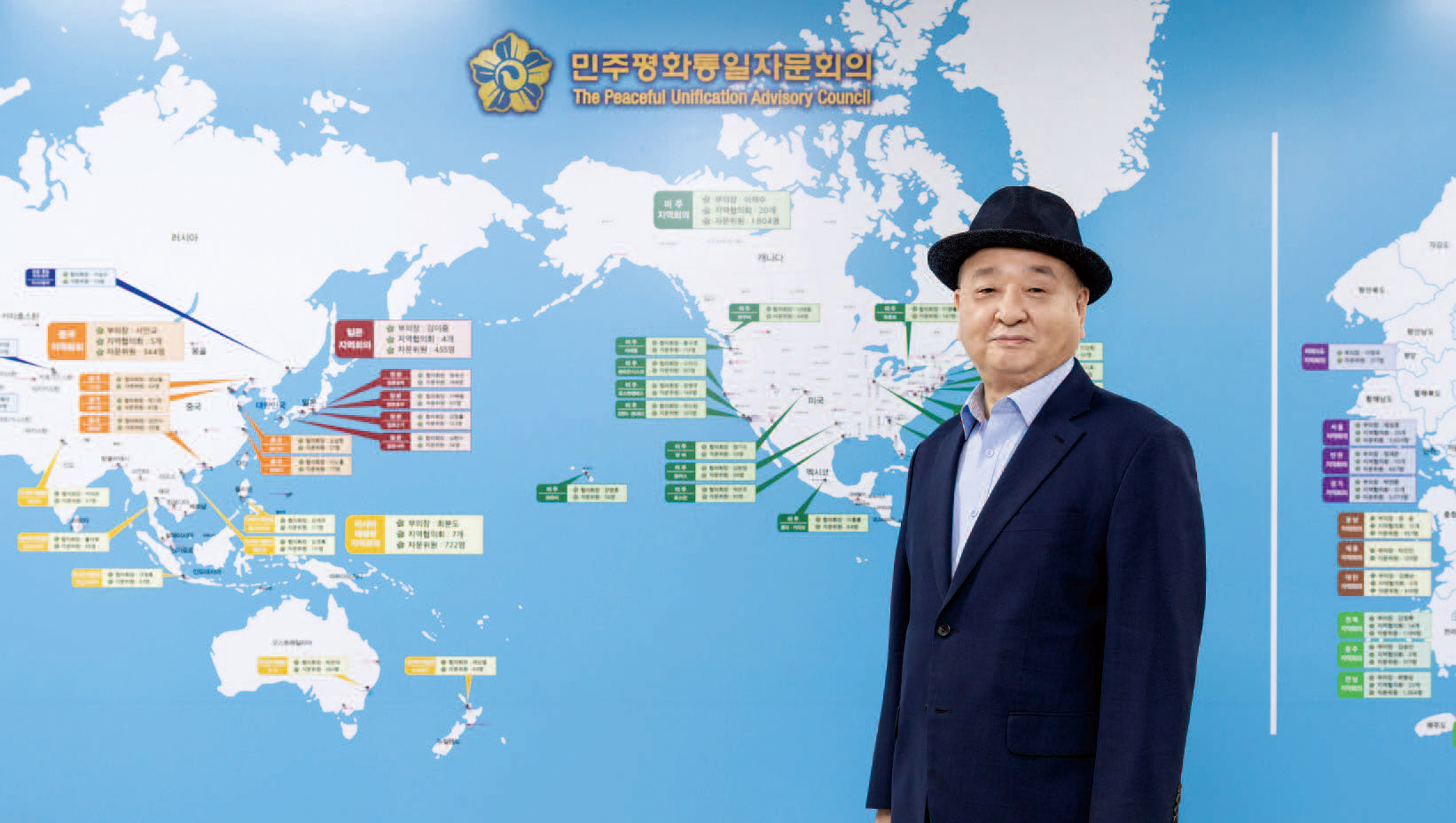
The Two Koreas Need to Build Trust for Peaceful Coexistence and Shared Prosperity
The South Korean government has been building and implementing the Korean Peninsula Peaceful Coexistence Policy, constantly delivering messages of shared prosperity. However, North Korea refuses to interact with the South in any way, insisting on its Hostile Two-State Policy. What should we do to overcome the current challenge, and what is the role of PUAC? In this interview with PUAC Executive Vice-chairperson Kang Chang-il, who took office in April, we explore ways to achieve peaceful coexistence and shared prosperity between the two Koreas.
You were appointed as Executive Vice-chairperson of PUAC in April. Please share your thoughts on the inauguration, and what you have been doing so far.
(Kang Chang-il) At a time when inter-Korean relations are more strained than ever, I feel a profound sense of responsibility in taking on the role of Executive Vice-chairperson of PUAC. Drawing on its extensive network of Council Members at home and abroad, PUAC has worked to gather public views on peaceful unification policies and convey them to the government, while fostering public discourse on peaceful unification and building broader consensus around it. Since taking office, I have been closely reviewing the full range of PUAC’s programs and activities, while exploring ways to lay a stronger foundation for our Council Members around the world to play an even more active role.
Restoring Trust, the First Step for Peaceful Coexistence on the Korean Peninsula
What is your assessment of the current state of inter-Korean relations?
(Kang Chang-il) We are going through a very frustrating and precarious time. To clearly understand why the relationship between the two Koreas has deteriorated to this extent, we need to try and understand recent developments from North Korea’s perspective, rather than only considering our ideas and opinions.
South Korea’s unification policies went from one extreme to the other depending on who is in power. President Moon Jae-in visited Pyongyang and Mount Paektu during his term, and the North Korea–U.S. summit diplomacy was more active than ever. On the contrary, the previous administration pursued policies that were hostile toward North Korea, which emphasized diplomacy guided by ideologies. This led to escalated tensions between the South and the North. North Korea, which has been ruled by the same regime to date, protested that they have a hard time deciding which tunes to dance to. In December 2023, in response to South Korea’s hostile North Korea policies at the time, President Kim Jong Un clearly declared the Hostile Two-State policy. North Korea even removed unification from its state goals when they amended their Constitution. It is deeply regrettable that the inter-Korean relations are stagnant with no sign of restoration, despite the persistent efforts to engage in talks and interact with North Korea under the peaceful coexistence policies.
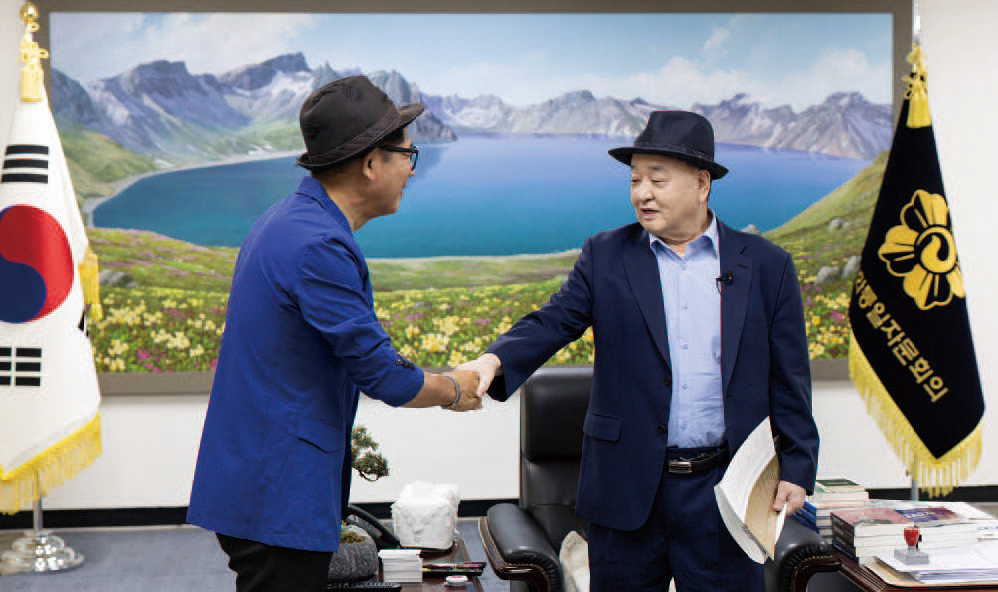
What is your opinion of North Korea’s Hostile Two-State Policy?
(Kang Chang-il) In the formal sense, South Korea and North Korea are two separate states. They joined the United Nations separately, and they have different state regimes. Moreover, in 1953, the two Koreas signed an armistice agreement, not an end-of-war agreement. Technically speaking, the Korean Peninsula is still at war. In this sense, North Korea’s use of the term “hostile” is not entirely unreasonable. At the same time, North Korea’s declaration of the two-state policy can also be understood as a renunciation of its longstanding, overt or implicit, pursuit of unifying the Korean Peninsula under the Communist regime. It also carries the implication that South Korea, for its part, should not pursue unification by absorption. Viewed from this perspective, one could argue that the risk of war between the two Koreas has diminished somewhat compared with the past.
Recognizing the reality that two states exist on the Korean Peninsula would allow the two Koreas to build a more constructive relationship of peaceful coexistence without becoming preoccupied with relatively minor issues. One example is the controversy over whether North Korea should be referred to as the Democratic People’s Republic of Korea (조선민주주의인민공화국), or simply as Joseon (조선). Once we acknowledge that the two Koreas function in practice as separate states, it is appropriate to apply the principle of reciprocity in how each side refers to the other. If North Korea refers to our country as the Republic of Korea or Korea, we can likewise refer to North Korea as the Democratic People’s Republic of Korea or Korea. Conversely, if North Korea uses a disparaging form of address for us, we can simply adjust our terminology accordingly, in keeping with the diplomatic principle of reciprocity. Of course, we are accustomed to calling it “North Korea,” so there is no particular problem with continuing to use that term in everyday conversation. We only need to apply reciprocity in formal diplomatic settings and official x-documents. Taking issue with such established diplomatic practice and turning it into a prolonged controversy may, in some respects, do little more than fuel divisions within South Korean society, while contributing little to either the national interest or peaceful coexistence on the Korean Peninsula.
That does not mean, however, that the current situation should simply be allowed to continue. Above all, it is important to replace the word “hostile” with “peaceful.” To that end, our government is actively pursuing the Korean Peninsula Peaceful Coexistence Policy, guided by the vision of peaceful coexistence and shared prosperity. Although we have yet to see any forward-looking response from North Korea, I firmly believe that if we continue our efforts without giving up, peaceful coexistence on the Korean Peninsula can ultimately be achieved.
In your opinion, why do we need peaceful coexistence on the Korean Peninsula, and how should we work toward it?
(Kang Chang-il) Modern-day wars bring about catastrophic destruction and loss. There is no exception. The ongoing wars between Russia and Ukraine and between the United States and Iran provide vivid examples of the danger of military clash. Peaceful coexistence on the Korean Peninsula is the only sure way to prevent such catastrophe. Instead of confrontation and war, we need to build and maintain peaceful inter-Korean relations and work toward shared prosperity. To do that, we must lose no time in replacing the armistice agreement with an end-of-war agreement. We have to put an end to this state of war that has lasted nearly 80 years before we can gradually expand inter-Korean exchange efforts. In this process, if mutually beneficial forms of cooperation can be revived—such as South Koreans traveling to well-known tourist destinations in North Korea and North Korea providing relatively low-cost labor to the South, as was the case when tourism at Mount Kumgang and operations at the Kaesong Industrial Complex were active—we could naturally build a solid foundation for peaceful unification.
What matters most is that we remain patient and continue working to restore and strengthen trust between the two Koreas. Even if North Korea, as it does today, shows no response to our government’s gestures of peace, if we maintain this approach consistently regardless of which administration is in power, the door to inter-Korean exchanges will eventually open.
PUAC’s Contribution to Deescalation and Consolidation of Peace
To ensure the success of the peaceful coexistence policy, we desperately need the attention and support from our citizens. What do you think we should do on that front?
(Kang Chang-il) We need a realistic approach to the inter-Korean issue and candid discussions. In the past, we merely proclaimed the need for unification without providing an x-x-objective justification. To put it bluntly, we insisted on “no-questions-asked unification as an imperative.”
Such claims no longer resonate with people in this day and age. Unless we logically establish why we need peaceful coexistence and unification on the Korean Peninsula, we may face serious backlash instead of empathy and support. That is why we need to start talking about peaceful coexistence and unification in highly realistic terms. To gain public support and powerful momentum for the Korean Peninsula Peaceful Coexistence Policy, we need to clearly establish what benefits and advantages peaceful coexistence and peaceful unification will bring to our country and its citizens, as well as a compelling rationale to deliver the message in an effective way. I believe PUAC should play the pivotal role as we address this issue, as we are closer to the citizens than any other organization.
To effectively address the inter-Korean conflict, we first need to address various conflicts escalating within South Korea, that is, the so-called “South-South conflict.” Can you share your thoughts on how to bring citizens together?
(Kang Chang-il) South Korea is not the only country experiencing escalating conflicts within its borders. Today, people consume content tailored to their ideas and preferences through IT devices, limiting opportunities to talk to different people and narrowing their view of the world. As a result, more and more people think that “you are wrong if you are different from me,” which has led to conflicts along lines of gender, generation, and region. However, we still have the benefit of common sense and moderation. Most citizens remain within these bounds. While extreme opinions may stand out in media reports, I think we can contain them below a certain threshold by the power of people’s collective intelligence.
Granted, we need a space where people bring their diverse ideas to the table, candidly share their opinions, engage in in-depth discussions, and agree on the best directions for all. I am also confident that PUAC can serve as a public forum for constructive discussions. In fact, PUAC consists of domestic and overseas members who share open-mindedness despite their diverse backgrounds, regions, orientations, and ideologies. The various exchanges and discussions undertaken by Council Members with PUAC will serve as a focal point to bring the people together, greatly contributing to overcoming the South-South conflicts.
The diversification of international conflicts has emphasized the importance of peace in Northeast Asia as well as between the two Koreas. How can South Korea contribute to peace in Northeast Asia?
(Kang Chang-il) Some people claim that we are stuck in the middle of conflicts among various countries neighboring the Korean Peninsula. However, I would describe the situation differently, that Korea proudly stands amid the various conflicts, practicing pragmatic diplomacy that ax-voids taking sides. Therefore, I think that Korea should take the initiative and actively emphasize the importance of peace in Northeast Asia to countries such as China, Japan, and Russia.
Although we are bound to have disagreements, I suggest we develop the rationale for peace in the region, along with concrete action plans, to achieve cooperation and mutual prosperity in a larger x-framework.
The independent activist Ahn Jung-geun developed his theory of “Oriental Peace” while enduring the harshness of the Japanese Occupation. Through this idea, he emphasized the need for unity and peace in the East. If we follow in his footsteps by laying the groundwork for a new, broader-minded theory of peace for Northeast Asia tailored to the situation at hand, and persuading our neighboring countries, the journey toward peace in Northeast Asia and peaceful coexistence on the Korean Peninsula will be that much easier.
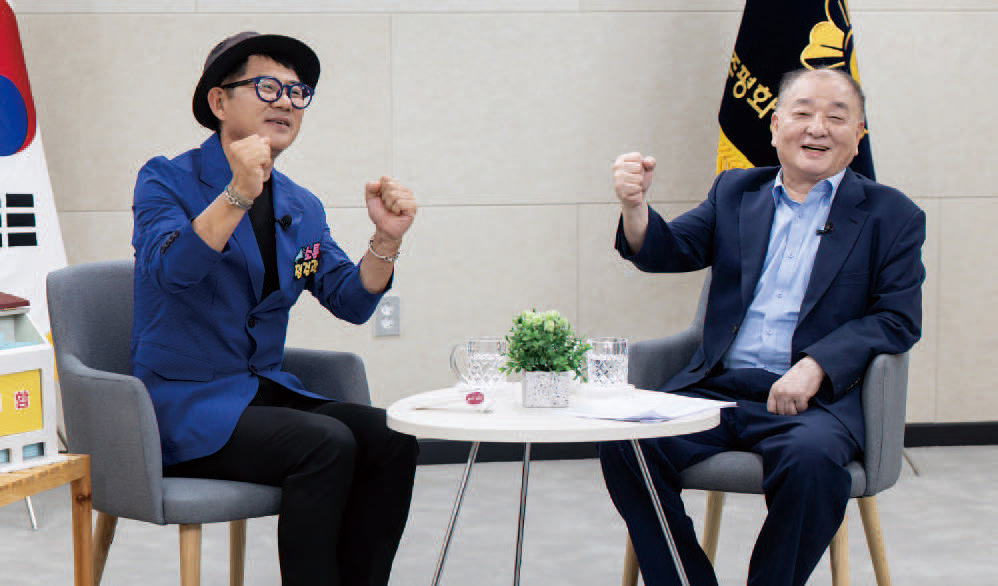
Restoring Trust between the Two Koreas and Building Peaceful Coexistence Through Firm Determination
In addition to its provincial assemblies and municipal chapters in Korea, PUAC operates a network of more than 4,000 members across 137 countries around the world. Can you share your thoughts on the efforts of these overseas members for peaceful coexistence on the Korean Peninsula?
(Kang Chang-il) Overseas Council Members often exert significant influence in their communities in various ways. Their influence plays a significant role in raising awareness of the government’s Korean Peninsula Peaceful Coexistence Policy, building consensus, and explaining the importance of peaceful unification. Living in third countries, overseas Koreans are particularly passionate and determined when it comes to unification, even more than people living in Korea, who are directly involved with the issue. To fulfill their hope, they are actively engaged in public diplomacy activities for peaceful unification, including the peace agreement and end-of-war agreement campaigns. I would like to take this opportunity to express my deepest gratitude to our overseas members for their efforts to draw global attention to peaceful coexistence on the Korean Peninsula and the peaceful unification of the two Koreas. Going forward, PUAC Secretariat and I will pay special attention to supporting their activities more efficiently.
Please share your plans as Executive Vice-chairperson, and a word to our readers.
(Kang Chang-il) For our North Korea policy to take root across the country, we need the efforts of PUAC and its tight-knit human network in Korea and overseas. I will do everything within my power to ensure that PUAC fulfills its role as an effective channel for communicating the Korean Peninsula Peaceful Coexistence Policy. I will also focus on ensuring that people’s voices on peaceful coexistence and unification are fully conveyed to President Lee Jae Myung.
I am fully aware of the gravity of my responsibility as Executive Vice-chairperson of PUAC during these difficult times in inter-Korean relations. However, I also welcome the great opportunity to offer my final service to the country and dedicate myself to peace on the Korean Peninsula, and I am more than willing to take it. I will use this heavy sense of responsibility as the driving force for the efforts to restore trust between the South and the North, and achieve peaceful coexistence and shared prosperity on the Korean Peninsula. I ask for support and words of encouragement from the Secretariat, the Council Members in Korea and overseas, and readers of the Peace & Unification Magazine. Let’s work toward peaceful coexistence on the Korean Peninsula together!
-
How satisfied are you with the information you have reviewed?